The 2026 NFHS Softball Rule on Electronic Devices: What Coaches, Players, and Umpires Need to Know
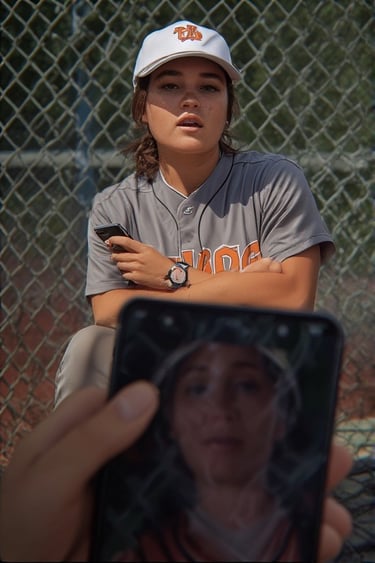
Beginning with the 2026 high school softball season, the National Federation of State High School Associations (NFHS) has introduced a significant clarification regarding the use of electronic devices on the playing field. While technology has become increasingly common in training, scouting, and communication, the NFHS has taken a firm stance on what is—and is not—permitted during live play. The updated rule, found in Rule 1 9 6, clearly defines restrictions on electronic devices and reinforces the organization’s commitment to safety, fairness, and the integrity of the game.
COACHES ONLY
Coach K
4/7/20263 min read
What the 2026 Rule Actually Says
The updated Rule 1‑9‑6 states that no player shall transmit or record audio or video from the playing surface. This includes any form of live recording, communication, or data capture using handheld devices, wearable cameras, smartphones, smart glasses, or any other electronic equipment. The NFHS added new language specifically to clarify the types of devices that fall under this prohibition. NFHS
This rule does not ban all electronic devices in the dugout or team areas—those remain permissible for coaching, charting, and strategy. Instead, it focuses exclusively on preventing players on the field of play from using or wearing devices capable of recording or transmitting information.
Why the Rule Was Updated
The NFHS Softball Rules Committee provided clear rationale for the change: the rule needed to better define prohibited devices and address growing concerns about safety, distraction, and competitive equity. NHSUA
Here are the key reasons behind the update:
1. Player Safety
Recording devices—especially handheld phones or wearable cameras—pose physical risks during high‑speed plays. A device can:
Interfere with catching or throwing
Become an entanglement hazard
Cause injury during collisions or slides
The NFHS emphasized that players must remain fully focused and unencumbered to perform safely. NHSUA
2. Preventing Distraction
Players attempting to record or transmit information may lose situational awareness. Even momentary distraction can lead to:
Missed defensive assignments
Delayed reaction times
Increased risk of injury
The rule ensures that athletes remain fully engaged in live play.
3. Protecting Competitive Integrity
Live recording or transmission from the field could create unfair advantages, such as:
Real‑time pitch‑calling analysis
Opponent signal capture
Unauthorized communication with coaches or spectators
By prohibiting all on‑field recording and transmitting, the NFHS maintains a level playing field.
4. Addressing Privacy and Liability Concerns
Audio recording in particular raises issues around:
Capturing private conversations
Recording minors without consent
Potential misuse of recorded content
The rule eliminates these risks by banning all on‑field audio/video capture.
What Is Still Allowed?
The rule does not eliminate all technology from the game. Teams may still use electronic devices in the dugout or bench area, including:
Tablets for charting
Video review for coaching (not during live play)
Pitch‑calling systems used legally off the field
Communication tools that do not involve players on the field
The restriction applies only to players physically on the playing surface.
What Is Not Allowed Under Rule 1‑9‑6
The following are prohibited for any player on the field during live play:
Smartphones
Smart watches
GoPro‑style cameras
Helmet‑mounted or body‑mounted cameras
Earbuds or communication devices
Any device capable of recording or transmitting audio/video
The NFHS made it clear that this includes both active and passive recording. Even if a device is not actively being used, simply wearing it on the field violates the rule. NFHS
Penalties for Violations
Violations fall under the general penalties for illegal equipment. Depending on the situation, umpires may:
Issue a team warning
Remove the device
Restrict or eject the player for repeated or intentional violations
The NFHS emphasizes that enforcement is necessary to maintain safety and fairness.
How This Rule Fits Into Broader 2026 Changes
The electronic‑device clarification is part of a larger set of 2026 NFHS softball updates, which also include:
Reformatting of Rule 8 for clarity
Updated penalty and effect structures
Editorial changes across multiple rule sections
Uniform updates for umpires (heather gray pants discontinued after 2026) NFHS
These changes reflect the NFHS’s ongoing effort to modernize and clarify the rulebook.
What Coaches Should Do Now
To prepare for the 2026 season, coaches should:
Review all team policies on electronic devices
Ensure players remove smart watches and phones before entering the field
Educate athletes on the safety and fairness reasons behind the rule
Use technology appropriately in the dugout without violating on‑field restrictions
Clear communication early in the season will prevent confusion and penalties later.
Final Thoughts
The 2026 NFHS rule on electronic devices reinforces a simple but important principle: the field of play must remain a safe, distraction‑free, and fair environment for all athletes. By clearly defining prohibited devices and emphasizing safety and integrity, the NFHS has taken a proactive step to keep the game focused on athletic performance—not technology.
The Online Diamond Academy
We offer motivating, goal oriented and extensive online courses and lessons with fastpitch softball pitchers. These weekly step-by-step and one-on-one lessons offer a break down of the game at your pace and on your schedule. We thoroughly cover the most basic up to the most advanced techniques in all areas of softball including pitching, hitting, catching, fielding, conditioning, the mental game, coaching, softball parenting, statistical breakdown and more.
If you are interested in registering for one of our upcoming courses, would like more information or would like to become a member, please send us a message.
© 2026. All rights reserved.
Contact Us
Please submit the form below to register for camps, lessons, courses and our free recruitment profile.